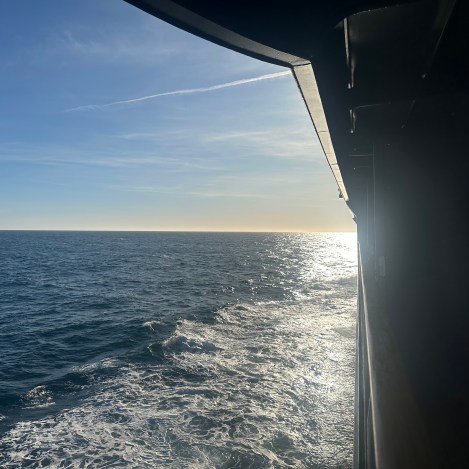
Day 15 – Bleaker Island
We were nearing the end of our trip, waves rolling slower than usual under cotton-wool clouds that softened the striking blue sky. We headed for the sandy coastline of Bleaker Island, a secluded spot southeast of the Falklands that has been carved away from the Lafonia peninsula.
Our captain steered us into the inner part of the archipelago ‘Adventure Sound’ and helpfully informed us that the ride to shore would be a ‘rollercoaster’ ride. Apparently the horrifying incident some people on the ship had just witnessed wasn’t quite enough trauma for one afternoon when I chose to stay in my cabin and listen to the blues. While I was scrolling through my camera roll, a murder-mystery broke out on deck. The ‘Bird of the Day’, a peregrine falcon created its own ‘art’ and interrupted the supposed harmony of albatrosses, petrels and porpoising Commerson dolphins that circled the ship. The delightful atmosphere was cut short when a petrel’s head was found on deck shortly after. Turns out the assassin was “Bird of the Day”.
As for the rest of us, we were given a heads-up about the massive swells we would have to battle and a guaranteed shower for anyone sitting at the front of the zodiac. I inadvertently sat at the front and arrived at Pebbly Bay drenched. After surviving this ride and walking toward the lakes by Cassard House, a flying gull pooped right on my gloves and camera lens. I soothed my ego with old superstition that being shat on by a bird is a sign of incoming wealth of which I can confirm is a pack of shit.
Bleaker Island hides below the horizon so it sits low on the Atlantic which makes it hard for ship captains to see it until they accidentally hit a reef and lose the ship. The ‘bleak’ aura fits well with the branding crisis in 1857 too. Someone decided to pivot from ‘Breaker Island’ (because of wave breaks) to ‘Bleaker Island’. It could have been a mispronunciation blunder but I shall not digress.
On the other hand, Cassard House was named after a wheat-full-of ship called ‘Cassard’ that was transporting wheat from Australia to England in 1906 but struck a reef instead. The captain missed the island and the only casualties were the lost cargo of wheat and the bakery business. As for as the island, it was a revolving door of reclusive humans. William Fell started cattle farming in 1870 and then Arthur Cobb, a keen birder, dragged his family here in 1910 to watch birds and herd sheep for twenty years. His grand prize? A 13cm-long wren called ‘Cobb’s Wren‘ endemic to the Falklands named after him. After a century of leases, the Rendell family finally bought the place in 1999 and welcome international tourists to trudge through the mud.
We hiked a mile up to the Rockhopper Rookery, passing thousands of breeding imperial cormorants and the occasional crested caracara that pounced on them every now and then. Once we arrived, some people were losing their minds over a Macaroni penguin that was ‘out of place’ in a colony of Rockhopper Penguins. Then, there was another buzz about a Northern Rockhopper Penguin being antisocial on a cliff. The experts pointed out its ‘fluffier yellow brows’ but to my eyes, it just looked like another Rockhopper.
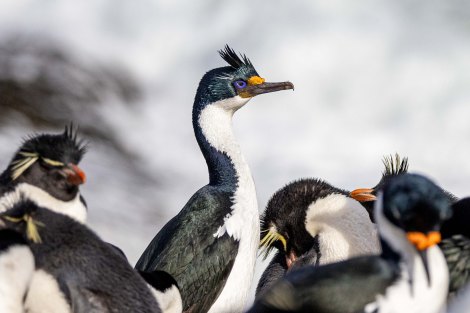
Imperial Cormorant
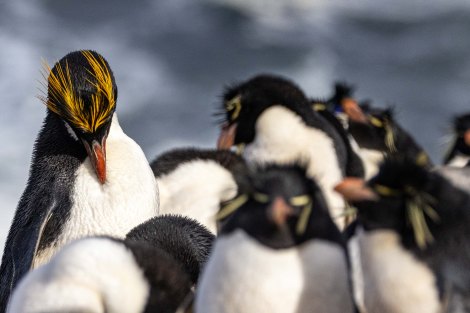
Macaroni Penguin
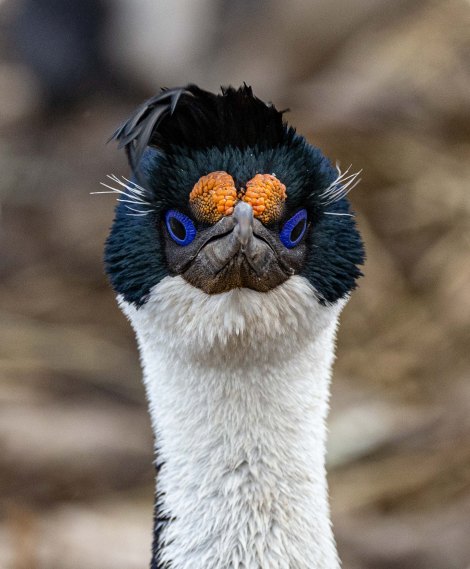
Mugshot – Imperial Cormorant
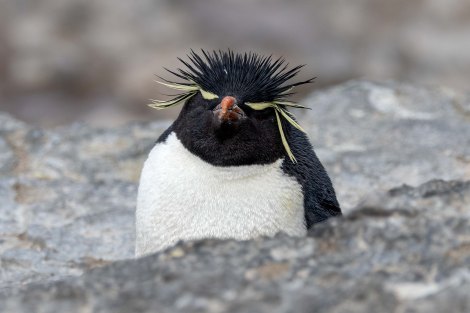
Rockhopper Penguin
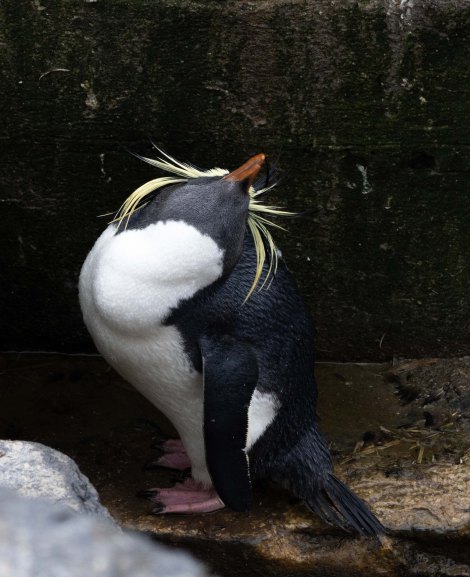
Northern Rockhopper Penguin
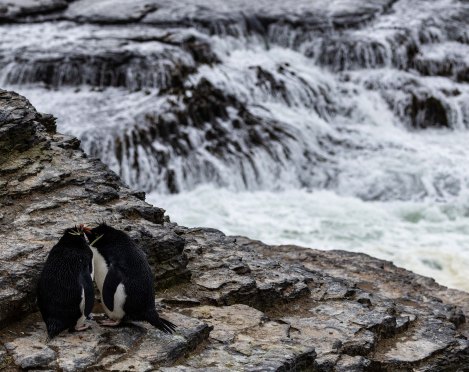
In love – Rockhopper Penguins
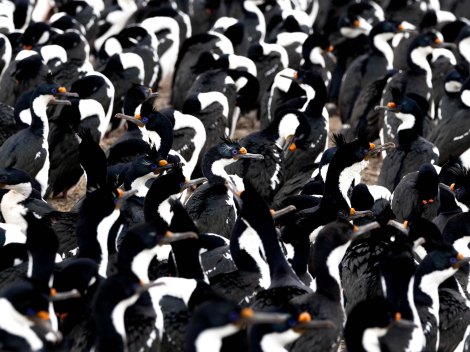
Imperial Cormorant Colony
Day 16 – At Sea
The sea was finally calm, I watched the light shift over the horizon on the way to Punta Arenas. With one day left, I hoped our final day would stay this peaceful, but I’m an optimistic fool. To be continued..